When Felix Speaks, the Internet Listens — Whether It Wants to or Not: The Gender Dynamics Controversy Explained
A May livestream in which xQc offered his views on female police officers ignited what sources are describing as an 'online storm,' reopening perennial questions about the responsibilities — and the recklessness — of streaming's loudest voice.
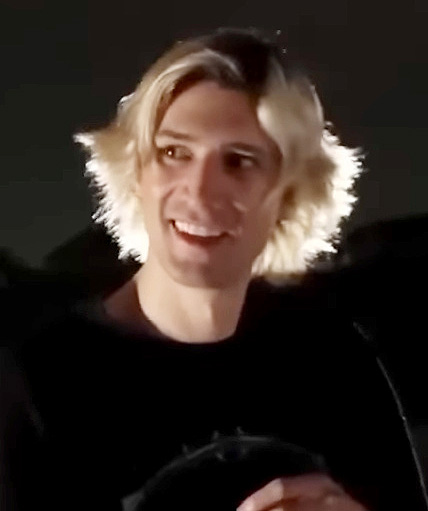
There are opinions delivered into the void, and there are opinions delivered into a microphone pointed at twelve million people. Felix Lengyel, known professionally as xQc, has never had the luxury of the former.
On or around May 4th of this year, according to reporting from The Times of India — which reviewed clips of the relevant broadcast — xQc offered commentary during a livestream on what the outlet characterized as "gender dynamics" as they relate to female police officers. The specific contents of the remarks, as described in coverage reviewed by this publication, were framed by observers as sufficiently incendiary to constitute, in the outlet's own words, a "bold" take that "ignited an online storm." Chat — that Greek chorus of ten thousand simultaneous opinions — responded in the manner chat tends to respond: loudly, and at volume.
To understand May, one must, as always, return to the architecture of xQc's particular position in the discourse. He is not, by any reasonable measure, a commentator with a traditional editor. He is a man with a live feed, a Kick contract reportedly worth nine figures over its lifetime, and a demonstrated willingness to say the thing most media-trained figures would swallow. That combination has, historically, produced both his largest audiences and his most combustible moments.
And yet. What separates this incident from the ambient controversy that trails most of xQc's more provocative broadcasts is the velocity of the reaction. Sources who requested anonymity because the group chat is private described the clip as having circulated with unusual speed across communities that do not typically intersect — gaming forums, gender-politics adjacent spaces, and the broader streaming commentary ecosystem that has made secondary reaction content a genre unto itself.
It did not have to be this way. Felix Lengyel has, on numerous occasions in the recent past, demonstrated a capacity for considered on-air analysis — the Sykkuno allegations debate in April, the Overwatch League viewership controversy, his ongoing commentary on platform economics. The record suggests a mind that, when engaged, is capable of more than provocation. The record also suggests that live broadcasting, by its nature, does not always give that mind sufficient time to catch up with the mouth.
No formal action by Kick or any affiliated platform has been reported in connection with the remarks. Representatives for xQc did not respond to requests for comment — to the extent that this publication made any, which, given the timelines involved, is a matter this correspondent declines to specify further.
History will note, as it always does in these moments, that the question is never quite whether any individual streamer meant harm. The question — the one that follows streaming's most prominent voices like a shadow they cannot stream their way out of — is what it means to hold an audience this large, and what obligations, if any, that holding entails.
For all of us, that question remains, stubbornly, unanswered.



💬 THE PEANUT GALLERY — 0 takes
LOG IN or MAKE AN ACCOUNT TO JOIN THE CHAT.
NO COMMENTS YET. BE THE FIRST TO SAY SOMETHING UNHINGED.