The James Charles Saga Has Become Showreel Material. A Presenter Just Proved It.
On June 10, a presenter demo reel filed under the James Charles story appeared on Mshale. That is the sentence. The saga has officially become professional audition content.
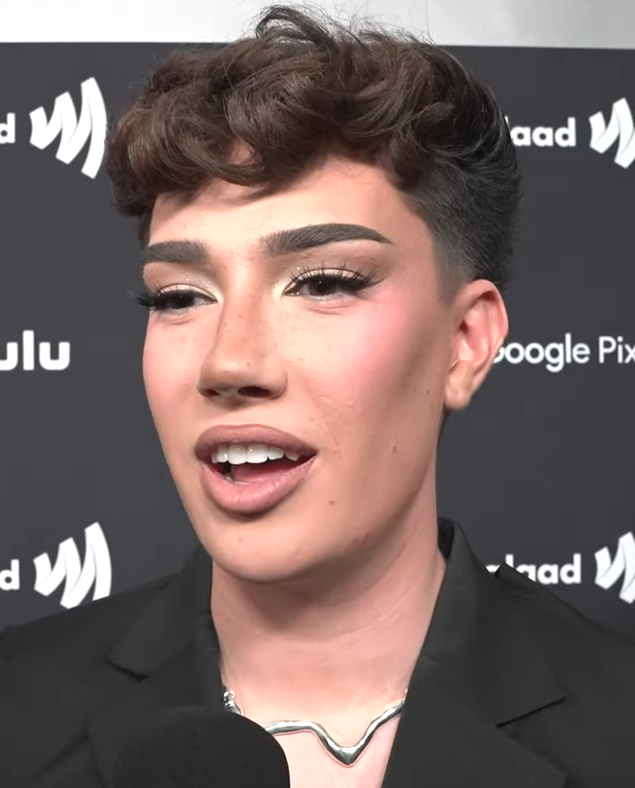
On June 10, a presenter showreel attributed to Sophie Simms surfaced on Mshale, a Minneapolis-based publication covering African diaspora communities, indexed directly within James Charles news coverage. The clip, catalogued under the identifier I2SX60yJEQ, does not appear to be a breaking news report. It is a demo tape. Someone built a professional media audition around the James Charles story and sent it into the world. That is new.
It is a small thing. It is also not a small thing at all.
What a Showreel Means
Presenter showreels function as credentials. Aspiring broadcast journalists and on-camera hosts select the stories they cover in demo packages carefully, because the subject matter signals range, relevance, and awareness of what audiences are watching. The selection of James Charles as that subject, on June 10, is a data point. It means that somewhere in the editorial calculus of at least one media professional, a months-long beauty-influencer controversy had achieved enough cultural saturation to function as a demonstration of competence rather than a demonstration of poor judgment in topic selection.
For the record, this is not the first signal that the story had crossed from platform drama into broader media legitimacy. On May 18, Fox News aired a segment on the Riley Gaines Show pairing Charles with Nicki Minaj as parallel case studies in cancel culture mechanics. On June 10, separately, Trillmag published an influencer fatigue analysis listing Charles as a central case. On June 6, Fathom Journal ran a piece titled "James Charles Can't Read The Room." The Mshale showreel item lands in that same window, the week the story was simultaneously being cited by academics, cable commentators, and now, demo-reel producers.
Mshale's readership skews toward African and African-American communities in the Upper Midwest. Its indexing of a James Charles presenter reel on June 10 suggests the story had sufficient name recognition across audience segments that a presenter calculated it would read as relevant to editors and producers reviewing her work, not as niche YouTube gossip requiring explanation.
The Saga in Brief, for Anyone Who Needs It
The underlying controversy is documented in detail across prior coverage, but the compressed version: in mid-May, James Charles posted a video mocking a laid-off Spirit Airlines employee named Amber Vargas who had started a GoFundMe. He lost approximately 140,000 Instagram followers in the days following May 13. Vargas publicly rejected a private apology from Charles on May 15. Gypsy Rose Blanchard donated to Vargas' GoFundMe on the same date. Trisha Paytas called Charles "awful" on May 20. Interview Magazine published "Enough With James Charles Already" on May 22. A second, public apology followed on June 9, the same day Tati Westbrook, his most prominent historical defender, issued a public statement urging the internet to move on. He uploaded a gaming video on June 13.
That arc, from a single mocking clip to a cable news cancel-culture panel to a beauty-empire business analysis to a Tati Westbrook intervention to a gaming pivot, took roughly five weeks. The showreel indexes into that arc on June 10, three days before the gaming video, at the precise moment the story was being cited as a cultural artifact in multiple editorial contexts simultaneously.
The timing matters because showreels are not filed in real time. They are assembled, edited, and submitted. Sophie Simms, whose professional background is not detailed in the Mshale listing beyond the presenter credit, made a deliberate editorial choice at some point in late May or early June. The story was worth building around. That is a judgment call that says something about where the story sat in the broader media ecosystem, regardless of what happens to Charles' subscriber count next quarter.
What This Is Not
This is not evidence that Charles has rehabilitated his public image. The available record from the June 9 apology and subsequent coverage suggests the second apology was received with skepticism comparable to the first. The AD HOC NEWS business analysis published June 18 framed questions about his commercial standing without resolving them. Tati Westbrook's defense generated its own commentary rather than closing the discussion. The gaming video received coverage primarily as a pivot narrative, not as a return to form.
What the Mshale showreel documents is something narrower and more specific: a controversy that began on a single platform, in a single community, has now generated enough cross-platform documentation that it functions as usable material for professionals working outside that community entirely. The story became a case study before it finished happening.
What Happens Next
Open questions as of June 20: whether the initiative Charles announced alongside his June 9 apology will be named and detailed publicly; whether Amber Vargas will make any further statement following the second apology; whether the business analysis questions raised by AD HOC News on June 18 will be addressed by Charles or his team; and whether the gaming content posted June 13 represents a sustained pivot or a single upload.



💬 THE PEANUT GALLERY — 0 takes
LOG IN or MAKE AN ACCOUNT TO JOIN THE CHAT.
NO COMMENTS YET. BE THE FIRST TO SAY SOMETHING UNHINGED.