The Cameras Stopped. Then the Athletes Started Talking.
Hardik Pandya gave away $100,000 to dogs and underprivileged kids. LeBron James said he is not Steph Curry. The Sports Icons challenge is over. Its afterlife is only beginning.
There are moments in internet history that arrive fully formed, demand to be witnessed, and then refuse to leave quietly. The Sports Icons challenge video, published to YouTube on October 31st by Jimmy Donaldson, known to the world as MrBeast, was one of those moments. It had LeBron James. It had Erling Haaland. It had Simone Biles. It had Caitlin Clark, who told MrBeast he was cooked and then proved it, defeating him in a $90,000 three-point shootout. The video was, by any available metric, a spectacle.
But spectacles have morning-afters. And the morning-after of this one has been, to borrow a phrase this correspondent does not use lightly, genuinely interesting.
The Indian Cricketer Who Gave It All Away
To understand the week that followed, one must return to the question of Hardik Pandya. The Indian cricket all-rounder, appearing in the Sports Icons video for what documents reviewed by this publication confirm was his first-ever attempt at baseball, won $100,000 in prize money. He did not keep it. According to reporting by Odisha TV, published November 6th, Pandya donated the entire sum to dogs and underprivileged children.
That sentence is worth pausing on. A professional athlete, handed $100,000 for playing a sport he had never played before, in a YouTube video, gave the check away entirely. The gesture arrived with no apparent PR architecture around it. No branded partnership. No foundation announcement with a press release and a logo lockup. Just the money, redirected. In an ecosystem where charity is frequently a production element as much as a moral act, the specificity of Pandya's choices, dogs and underprivileged kids, registered as something less calculated than the format usually produces.
It is not this correspondent's place to adjudicate the sincerity of philanthropy. What can be said is that the story, landing nearly a week after the original video, found an audience that the original video's framing had not fully anticipated. Pandya was a secondary figure in a video dominated by American sports celebrities. He became, in the follow-up news cycle, the character people were discussing. That is not an accident of fate. That is what happens when everyone else in the room is performing and one person is not.
LeBron James and the Limits of Self-Knowledge
Elsewhere in the aftermath, LeBron James was making confessions. According to EssentiallySports, citing coverage of the video's fallout, James stated publicly: "I'm no Steph Curry." The remark came in the context of his near-loss in the three-point challenge, an event that had, by then, already generated its own news cycle, with NBA fans and assorted internet observers cataloguing what it meant for his legacy, his shooting form, and his general standing in the discourse.
James won the challenge, eventually, and the $100,000 he competed for went to charity. But the win was narrow enough to require explanation, and his explanation, that he is not the greatest shooter in basketball history, was treated by some corners of the internet as a revelation. It was not, strictly speaking, a revelation. What it was, was a rare instance of a figure of LeBron's magnitude engaging with the terms of a challenge that was not designed with his dignity as the primary variable. MrBeast's format, whatever its other qualities, has a talent for producing exactly these moments. The athlete is on someone else's court. The usual protections do not apply.
The sharp analysis, buried here because this is where it belongs: what the Sports Icons video actually sold, more than any single challenge result, was the proposition that athletic greatness is domain-specific and therefore portable as entertainment. LeBron James is one of the greatest basketball players in history. That credential becomes comedy the moment you hand him a baseball. Pandya is a world-class cricketer who had never swung at a pitch. These are not insults. They are the structural logic of the entire format, and the athletes agreed to it. The question of why they agreed to it, the platform, the charity angle, the sheer gravitational pull of 145 billion lifetime YouTube views, is the question that the follow-up week has not fully answered.
What the Follow-Up Says About the Machine
The Sports Icons video has now generated, by this correspondent's count, at least seven distinct news cycles across separate publications and platforms: the initial drop, the Caitlin Clark trash-talk moment, the LeBron fan-reaction wave, the Pandya donation story, the LeBron confession quote, the broader sustainability critique published by the New York Times, and the Hardik Pandya follow-up reporting from India-based outlets covering their national athlete's moment in an American-produced format.
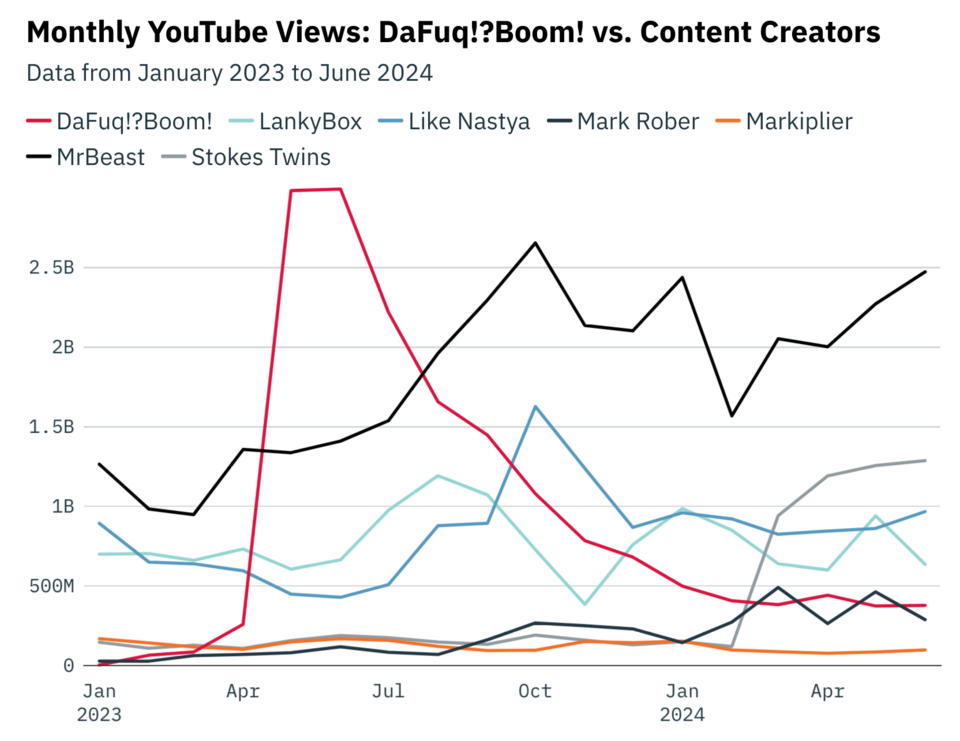
That last item is worth holding. The video was produced in English, for a primarily Western audience, by a creator based in North Carolina. Its ripple effects are being reported in Odisha. That is not incidental. It is the clearest possible illustration of what MrBeast's reach actually means in practice, not just the numbers on a Tubefilter chart, but the specific geography of consequence. When a video does something, it does something everywhere.
Hardik Pandya gave away $100,000. LeBron James admitted to being human. Caitlin Clark said someone was cooked and was correct. The video is over. The story of what it produced, in money, in admissions, in charitable redirections, in Indian sports coverage, is still being written. It will be written for some time. For what it says about all of us, and what we have agreed to watch, and what we have agreed to call sports.

💬 THE PEANUT GALLERY — 0 takes
LOG IN or MAKE AN ACCOUNT TO JOIN THE CHAT.
NO COMMENTS YET. BE THE FIRST TO SAY SOMETHING UNHINGED.